
Ayubia National Park and the Pipeline Track: A Complete Visitor's Guide (Walk, Wildlife and the Chairlift)
October 2026The Pipeline Track is a flat, shaded forest walk of about 4 km between Dunga Gali and Ayubia, roughly an hour to ninety minutes each way, and it is the easiest way into Ayubia National Park, the protected forest that wraps around the southern side of Nathiagali.
Between them, the park and the track account for most of what visitors to the Galiyat do on foot: a flat walk under tall conifers, monkeys on the fence posts, and, for decades, a chairlift ride at the far end. This guide explains what the park is, how the walk really goes, and what you should know about the chairlift before you promise it to the children.
The short answer
Ayubia National Park covers about 3,300 hectares of Himalayan forest, around 4 km from Nathiagali. Start the Pipeline Track at Dunga Gali, 3 km from the village, walk one way to Ayubia and take a taxi back, or turn round whenever you like; it is manageable for nearly every age. The old Ayubia chairlift was shut on safety grounds in 2021 and, at the time of writing in October 2026, we could not confirm that it has reopened, so check locally before you build a day around it.
What is Ayubia National Park?
The park was declared in 1984 and later enlarged to its present size of roughly 3,312 hectares, or about 33 square kilometres, in Abbottabad District of Khyber Pakhtunkhwa. It takes its name from Ayub Khan, Pakistan's second president. Mukshpuri, at about 2,800 metres, rises within the park area, and the Pipeline Track runs along its flank at around Nathiagali's height.
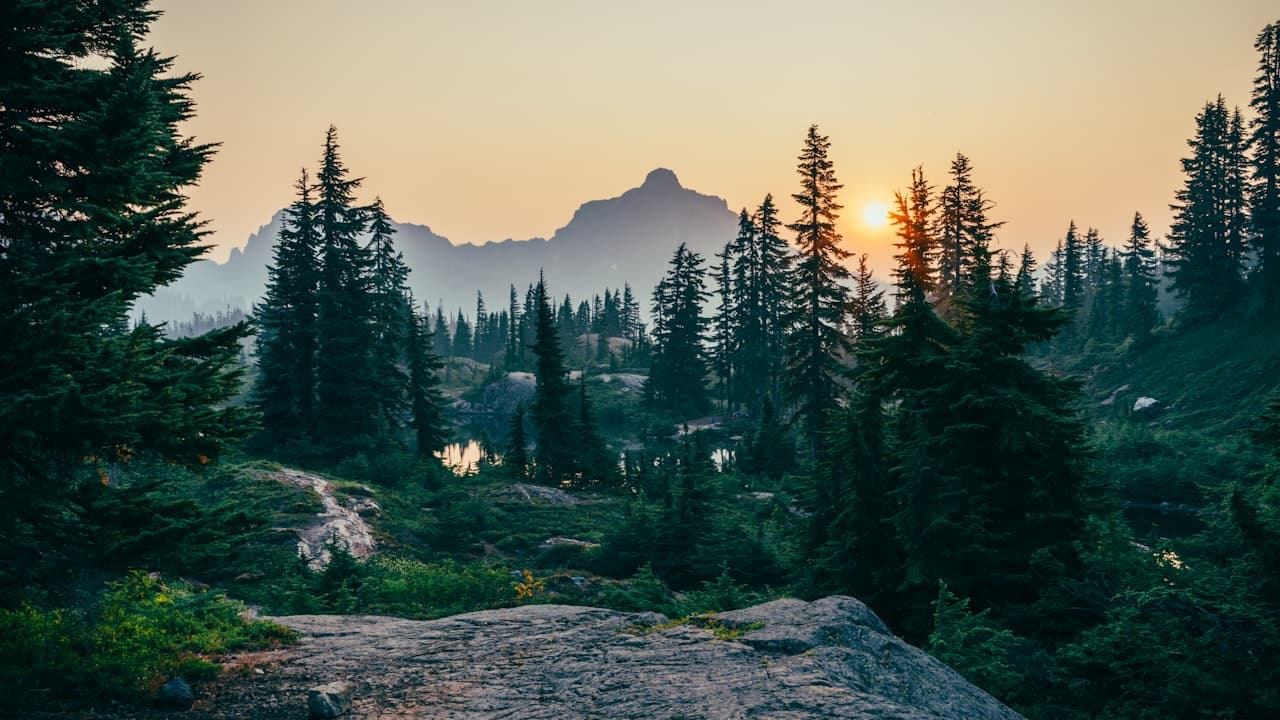
What it protects is one of the better surviving blocks of moist temperate forest in Pakistan: deodar cedar, blue pine, silver fir, yew, oak and horse chestnut, with a thick understorey that stays green long after the plains have browned. The park is small by national-park standards, and it is ringed by villages and hill resorts, which is why it is so accessible and also why staying on the paths and carrying your rubbish out matters here more than in most places.
What wildlife lives in Ayubia National Park?
Published species lists run to roughly 200 birds and a couple of dozen mammals. The mammal everybody asks about is the leopard. Common leopards do live in these forests; they are shy, mostly active around dusk and at night, and the great majority of visitors never see one. The sensible response is not fear but timing: walk in daylight, walk in company, and keep small children close rather than letting them run far ahead.
The animal you will certainly meet is the rhesus macaque. The monkeys along the Pipeline Track are bold and used to people, so keep food zipped inside a bag and do not feed them; feeding is what makes them aggressive. Red foxes and jackals are present but rarely seen. For birdwatchers the park is known for its pheasants, including the koklass and the kalij, though you will need patience and luck to see either. Early morning, before the track gets busy, is by far the best time for birds.
The Pipeline Track: where does it start and how long is it?
The track runs between Dunga Gali, 3 km from Nathiagali on the road towards Murree, and Ayubia. It follows the line of an old water main that carries water along the ridge towards Murree, which is why it is so unusually level for a mountain path: water pipes, like railways, dislike gradients. Published figures for the length range from about 3.5 to 4.5 km one way, and 4 km is a fair working number; either way it is a walk of an hour to ninety minutes in each direction at a relaxed pace, longer with children and photographs.
Wear shoes with grip and be off the track well before dusk. The path is a wide, unsealed forest track cut into a steep hillside, shaded for almost its whole length, with railings on the more exposed stretches and benches and viewpoints where the trees open towards the ridges. There is usually a small entry ticket at the gate, and the amount changes from time to time, so carry some cash. There is very little for sale on the track itself, so bring water and buy snacks in the bazaar before you set off.
Which direction should you walk the Pipeline Track?
From Nathiagali, start at Dunga Gali. It is the nearer end, the trailhead is easy to find, and you finish at Ayubia, where there are tea stalls and somewhere to sit. The height difference between the two ends is so slight that direction makes no real difference to the effort. The decision that matters is whether to walk both ways. A there-and-back is about 8 km, which is a proper morning. If that is too much, arrange for your driver or a local taxi to meet you at the Ayubia end, or simply walk out for half an hour, turn round at a viewpoint, and come back the way you came.
Is the Pipeline Track suitable for elderly visitors and pushchairs?
For older walkers it is the best trail in the Galiyat. There is no real climbing, the shade keeps it cool, and there are regular places to rest. Anyone who can manage a level walk of an hour can manage this, and those who cannot can still enjoy the first kilometre and turn back. Remember that you are at about 2,400 metres, so set a slower pace than you would at home.
Pushchairs are a more qualified yes. The surface is earth and stone rather than tarmac, so a sturdy pushchair with decent wheels copes in dry weather, while a light city stroller will struggle, and after rain the path gets muddy and rutted. With a baby, a carrier is the simpler choice. It is not a realistic route for a standard wheelchair without strong helpers. In winter the track often lies under snow and ice; it is still walkable with proper boots and care, but not with wheels of any kind.
Is the Ayubia chairlift open in 2026?
This is the question on which most guides are out of date. The Ayubia chairlift, long described as the first of its kind in Pakistan, was closed by the Galiyat Development Authority in October 2021 because the ageing equipment was judged unsafe. It then stayed shut for years while plans to replace it stalled; in 2024 the forest department withdrew an agreement to modernise it over concerns about building inside a national park.
Restoration has been announced more than once since then. At the time of writing, in October 2026, we have not been able to confirm that it is carrying passengers. Treat it as a bonus rather than a plan: ask your hotel or host, or a driver in the Nathiagali bazaar, on the day. If it is running, expect queues at weekends. If it is not, Ayubia is still worth reaching on foot for the walk itself, and the chairlift at Patriata near Murree is the usual alternative for families who have promised someone a ride.
When is the best time to visit Ayubia National Park?
April to October is the reliable window. April and May bring fresh growth and quiet paths. June to August is the busiest period, cool at around 15 to 25C while the plains bake, and the track is crowded by late morning at weekends, so start by eight. July to September is the monsoon: the forest is at its greenest, but showers arrive quickly and the path turns slippery, so carry a rain shell. September and October are the finest walking months, with clear air and thinner crowds. From December to February the park lies under snow, and the Pipeline Track becomes a snow walk for well-shod adults rather than a family stroll.
For the full picture of weather, snow and crowds through the year, see our month-by-month guide.
Read the best time to visit Nathiagali →How do you get to Ayubia and the Pipeline Track from Nathiagali?
Take the main Galiyat road out of Nathiagali towards Murree. Dunga Gali is 3 km along it, a few minutes by car or local taxi, and fit walkers can do it on foot along the road. The Pipeline Track gate is signposted from the Dunga Gali bazaar, and the Mukshpuri trail starts nearby, so parking fills early on summer weekends. Ayubia itself lies further along the same road towards Murree and can be reached by car if you would rather start from that end or need collecting there.
If you want more than a level walk, Mukshpuri starts nearby in Dunga Gali and climbs to about 2,800 metres in two to three hours.
Read the Mukshpuri trek guide →Or compare all three classic trails, including Miranjani, on distance, time and difficulty.
Compare the Nathia Gali hiking trails →Staying near Ayubia National Park
The most convenient base for the park is Nathiagali itself, ten minutes from the Dunga Gali trailhead and a better place to spend an evening than Ayubia. MYG Nathiagali's serviced apartments are on the main Nathia Gali road, two minutes' walk from the bazaar: a three-bedroom apartment with 3.5 washrooms, a lounge with a smart TV, a dining table for six and a fitted kitchen for families, and a one-bedroom attic apartment for couples. Both have a smart TV, free Wi-Fi, a tea setup, an on-site cook and room service from the building's restaurant floor. Stays are booked direct by phone on +92 333 9111 550 or WhatsApp on +92 334 4131332.
See the serviced apartments →To see exactly where the building sits in relation to Dunga Gali, Ayubia and the routes up from Islamabad and Abbottabad, the location page has the map and drive times.
See the location and routes →More Stories
 Travel Guide
Nathiagali Honeymoon Guide: Best Months, a 3-Day Couples Itinerary and Where to Stay
 Travel Guide
Nathiagali Road Conditions: Is the Road Open, and Can You Drive Up in Snow?
 Travel Guide
Nathiagali vs Naran vs Swat: Which Hill Station Should You Choose This Summer?
Want to Live in Nathiagali?
MYG Nathiagali — luxury apartments near Abbottabad, delivering 2026