Nathiagali Road Conditions: Is the Road Open, and Can You Drive Up in Snow?
October 2026The roads to Nathia Gali are open and paved for most of the year; from December to February heavy snow can close them for hours, occasionally a day or more, and the Abbottabad side usually reopens first. The question we hear most from people planning a trip to the Galiyat is not about hotels or hikes. It is about the road. Is the Nathiagali road open? Will a small car make it? What happens if it snows while we are up there? They are sensible questions, because the last 34 to 35 km to Nathiagali, whichever side you come from, is a winding mountain road that climbs to roughly 2,410 metres, and its condition changes with the season, the weather and the day of the week.
The short answer
For most of the year, from about March to November, the road to Nathiagali is open, paved and fine for any ordinary car driven with care. From December to February heavy snowfall can close it for a few hours or, after a big storm, a day or more, and the authorities sometimes stop tourist vehicles altogether until the snow is cleared. In winter the Abbottabad approach usually reopens first, snow chains are strongly advised, and you should check conditions on the morning you travel rather than the night before.
Which road is better: via Murree or via Abbottabad?
There are two ways up. The first runs from Islamabad along the Murree Expressway to Murree and then follows the Galiyat road north along the ridge through Changla Gali, Ayubia and Dunga Gali to Nathiagali. It is the shorter route, roughly 80 to 90 km, and on a quiet weekday takes about 2.5 hours. The second uses the Hazara Motorway to Abbottabad and climbs the Abbottabad to Nathiagali road, about 34 km, in 30 to 45 minutes. It is longer on the map, roughly 130 to 150 km from Islamabad, but most of it is fast motorway.
Take the Murree road on weekdays, in spring and autumn, and whenever you want the ridge scenery. Take the Abbottabad road on summer weekends, on Eid and other public holidays, in winter, and if anyone in the car dislikes long stretches of bends, because the mountain section is less than half as long. Travellers from Peshawar and the rest of Khyber Pakhtunkhwa should use the Abbottabad side in every season.
We have covered the distances, route numbers and drive times from Islamabad in detail in a separate guide, so we will not repeat them here.
Read how far Nathiagali is from Islamabad →Is the Nathiagali road open in winter?
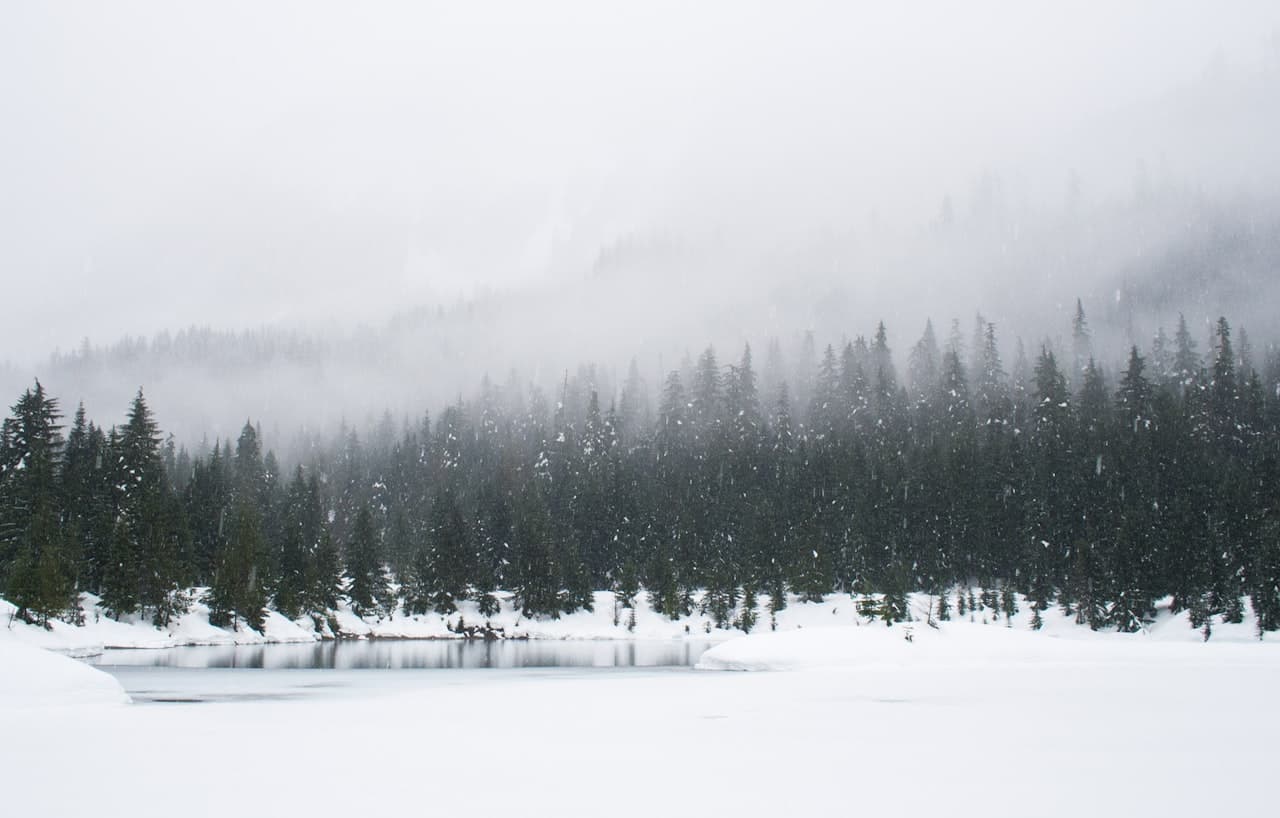
Usually yes, with interruptions. Reliable snow falls from December to February, with January normally the heaviest month, and each big spell follows the same pattern. Snow builds up on the road faster than it can be cleared, traffic is stopped, and machinery goes to work. Snow clearance in the Galiyat is handled by the Galiyat Development Authority (GDA) together with the provincial highway and works departments, and after an ordinary fall the main road is typically passable again within hours. After a major storm it can take a day or longer, and link roads to smaller villages take longer still.
Two details are worth knowing. First, the two halves of the road do not always share the same status. In some winters the authorities have restricted the Murree side of the road at night or during landslide risk while the Abbottabad to Nathiagali section stayed open. If you are travelling in snow season, plan on the Abbottabad approach. Second, during the heaviest spells the authorities on both the Murree and Galiyat sides have barred tourist vehicles entirely, letting only residents through. That is not an inconvenience to argue with at a checkpoint. It exists because of January 2022, when thousands of cars were trapped in a blizzard around Murree and more than twenty people died in their vehicles.
For when the snow usually arrives, how deep it gets and how long it lies, see our snow guide.
Read the Nathiagali snow guide →Can I drive to Nathiagali in snow in a small car?
Be honest with yourself about this one. On a cleared, dry winter road, a small hatchback manages the climb without difficulty. On fresh snow or the packed ice that follows it, a small front-wheel-drive car on ordinary tyres will struggle on the gradients, and the problem is rarely going up. It is stopping and steering on the way down. A 4x4 with snow chains is the right vehicle for an active snow spell, and official winter advisories in the hills routinely tell visitors to carry chains, keep the tank full and dress warmly.
If you only have a small car, you still have good options. Travel a day or two after the snowfall rather than during it, when the road is cleared but the forests are still white. Fit chains where the snow begins; in season they are commonly sold and fitted at the roadside on the approaches, though you should not rely on finding them in a storm. Or leave the car in Abbottabad and hire a local 4x4 with a driver who does the road every day. If you do get stuck in a queue in heavy snow, keep a window slightly open and make sure the exhaust pipe is not buried, because a running engine in a snowed-in car can fill the cabin with carbon monoxide.
What are the roads like the rest of the year?
From spring to autumn the surface is paved and in generally good repair on both approaches. The hazards are different ones. In the monsoon, roughly July to early September, heavy rain brings occasional landslides and rockfall, and cloud can sit on the ridge and cut visibility to a few metres. Slow down, use dipped headlights rather than full beam in fog, and do not stop on blind bends for photographs. After a night of heavy rain, a delayed start is often wiser than an early one.
How bad is weekend and Eid traffic?
On the Murree side, bad enough to change your plans. The Murree Expressway and the road through Murree queue heavily on summer weekends, on Eid holidays and on the first snowy weekend of winter, and a 2.5-hour drive can turn into four or five hours. The Galiyat road itself also slows to walking pace through Ayubia and the Nathiagali bazaar on peak afternoons. The fixes are simple: leave Islamabad by 6 or 7 am, travel up on a Friday or midweek if you can, come down early on Sunday or wait until Monday morning, and use the Abbottabad approach on the busiest days.
Where can I get fuel?
Fill the tank before you start the climb. Islamabad, the motorway service areas and Abbottabad all have plenty of stations, and there is fuel in Murree. Beyond those points stations are few and far between on the ridge, and a holiday queue or a snow delay can burn far more fuel than the distance suggests, especially with the heater running. Arriving in Nathiagali with at least half a tank is a good rule in any season and an essential one in winter.
Is it safe to drive to Nathiagali at night?
It is possible, and locals do it, but we advise visitors against it. The road is unlit, fog settles after dark, oncoming drivers often use full beam on the bends, and in winter meltwater refreezes into black ice once the sun goes. Wildlife and parked vehicles add to the surprises. Plan to finish the mountain section in daylight, which in December means being on the final climb by about 4 pm. If you are running late, the Abbottabad road is the shorter stretch of mountain driving.
Where to check the road status before you leave
There is no single live traffic feed for the Galiyat, so use several sources. The Pakistan Meteorological Department's forecasts tell you whether snow or heavy rain is due. The Galiyat Development Authority and the Abbottabad district administration issue travel advisories and closure notices during snow spells, which the national press and news channels pick up quickly. The Khyber Pakhtunkhwa tourism helpline, 1422, runs round the clock for tourist information and emergencies. And the most reliable check of all is to phone wherever you are staying on the morning of travel, because someone standing on the road can tell you more than any forecast.
Can I get to Nathiagali without a car?
Yes. Vans and buses run from Rawalpindi and Islamabad to Murree and to Abbottabad throughout the day, and local vans and hired cars cover the Galiyat road from both towns to Nathiagali. Hiring a car with a hill driver from Islamabad or Abbottabad is the most comfortable option and is what we suggest for winter visits and for anyone nervous about mountain driving. Services thin out in the evening and during snow, so travel early in the day.
Coming from further away? Our guide for Lahore and Peshawar covers the motorway legs, where to stop and when to leave.
Read the Lahore and Peshawar driving guide →An easy place to arrive
Where you stay matters more than usual when the weather is uncertain. MYG Nathiagali is on the main Nathia Gali road, two minutes' walk from the bazaar, so you are never relying on a steep side lane that is the last to be cleared.
See the exact location and routes →The three-bedroom serviced apartment and the one-bedroom attic apartment are bookable for nightly and short stays, with a fitted kitchen, a smart TV, free Wi-Fi, an on-site cook and room service from the building's restaurant floor, so a day when the road is shut is a day by the window rather than a problem. Call +92 333 9111 550 or WhatsApp +92 334 4131332 before you travel and the on-site team will tell you how the road looks that morning.
See the serviced apartments →More Stories
 Travel Guide
Nathiagali vs Naran vs Swat: Which Hill Station Should You Choose This Summer?
 Travel Guide
Nathiagali Itinerary: How to Spend 2 or 3 Days in the Galiyat (Day-by-Day Plan)
Travel GuideNathiagali with Family: A Practical Guide for Kids, Grandparents and Big Groups
Want to Live in Nathiagali?
MYG Nathiagali — luxury apartments near Abbottabad, delivering 2026